AI Tools for Content Creators: What’s Trending Right Now in USA
- April 13, 2026
- 0
You do not need more apps. You need fewer tools that actually get work done. That is the real problem most creators face in 2026. They keep switching

You do not need more apps. You need fewer tools that actually get work done. That is the real problem most creators face in 2026. They keep switching
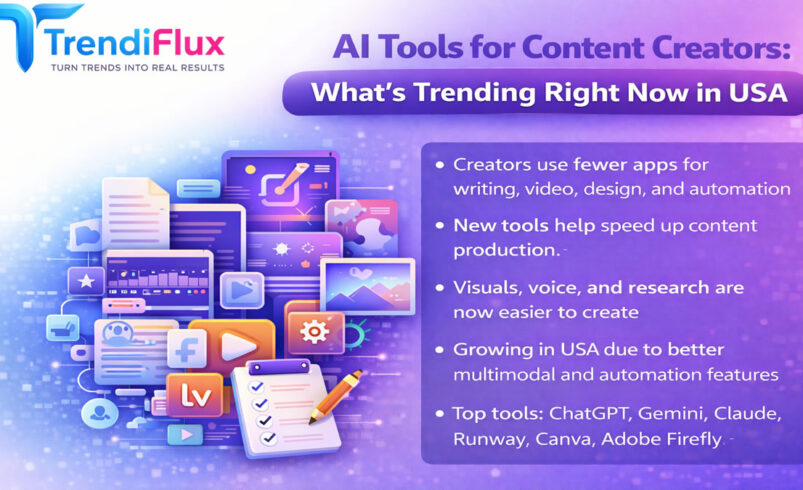
You do not need more apps. You need fewer tools that actually get work done. That is the real problem most creators face in 2026. They keep switching between writing apps, editing tools, design platforms, and automation systems. The result is more tabs, more confusion, and less output. That is why AI Tools for Content Creators is such a hot topic right now in the USA. The latest AI platforms are moving closer to real workflows instead of staying stuck in chat-only demos.
The trend is simple. Creators want speed, but they also want control. They want help with ideas, scripts, visuals, voice, video, and publishing. That is exactly where AI Tools for Content Creators is heading in 2026. The best tools are not just smarter. They are more connected, more practical, and easier to use for daily production.
At TrendiFlux, we bring you the latest trends across AI, technology, business, marketing, and more. In this article, we break down what’s trending in 2026, why it matters, and how it can impact your daily work, content, or online growth.
Creators in the USA are not just looking for “AI.” They are looking for speed, consistency, and output. That is why the most useful tools in 2026 are the ones built around multimodal creation, workflow automation, and research support. Google’s Workspace and NotebookLM push AI into everyday work. OpenAI has expanded ChatGPT with apps, connectors, and study and voice features. Perplexity keeps improving research workflows. Adobe Firefly now spans images, audio, and video.
For creators, that means less time moving content from one platform to another. A script can become a video. A research note can become a carousel. A rough draft can become a polished caption. That is the real reason AI Tools for Content Creators keep trending right now in the USA market discussions. It is not about hype. It is about compressing the content pipeline.
ChatGPT remains one of the easiest tools for ideation because it now does more than generate plain text. OpenAI’s current release notes and help pages show updated voice behavior, study mode, and app-based connections that make it more useful inside daily workflows. For content creators, this means better outline building, better repurposing, and faster first drafts. A short YouTube script, a newsletter intro, and a LinkedIn post can all come from one strong prompt. The limitation is still accuracy. You must verify facts before publishing.
This is why many creators start their workflow here. It is fast, flexible, and easy to learn. It is also one of the simplest ways to test AI Tools for Content Creators without overcomplicating your stack. A solo creator can use it to turn a topic idea into a full content plan in minutes.
Also, check out the Top AI Tools You Must Try in 2026.
Claude is strong when the task needs depth. Anthropic’s latest Opus release highlights better coding, stronger agentic tasks, and a 1M token context window in beta. That makes Claude useful for long scripts, detailed research synthesis, and heavier editing work. If ChatGPT is the fast generalist, Claude is the careful long-form assistant. The limitation is that it can feel like overkill for short social captions or quick one-line replies.
A realistic project example is a creator building a 30-day content series. Claude can help expand the idea into theme clusters, title variations, and reusable outlines. That saves time later when the posting schedule gets tight. It is one reason AI Tools for Content Creators has become a practical workflow topic instead of just a trend piece.
Gemini is a smart choice for creators who already live in Gmail, Docs, Sheets, and Drive. Google’s current Workspace pages highlight Gemini, NotebookLM, and AI help across core work apps. That makes it especially valuable for writers, marketers, and agencies that handle drafts, research notes, and client communication in Google tools. A business example is a small US content agency using Gemini to summarize briefs, draft email replies, and clean up docs before client review. The limitation is simple: it works best when your files and workflows are already in Google’s ecosystem.
Video is where a lot of creator growth is happening, and it is also where the latest AI tools 2026 are getting more interesting. Runway’s Gen-4 documentation emphasizes consistent video generation and controllable scenes. Adobe Firefly now covers images, audio, and video, and its 2026 updates include Quick Cut and Firefly video editor improvements. For creators, that means faster visual production and quicker rough cuts. The limitation is that AI video still needs human taste. Otherwise, everything starts to look the same.
This matters because video is now part of almost every creator strategy. Short-form clips, thumbnails, voiceovers, and branded intros all move faster when the production layer is AI-assisted. That is why many people searching for AI Tools for Content Creators are really looking for video tools first.
Also, check out the Best AI Tools Trending in USA 2026.
For editing and voice, creators want tools that reduce friction. Descript-style workflows are popular because they help creators edit audio and video like a document. ElevenLabs is widely used for realistic voice generation and narration. Adobe Firefly also now pushes into audio and voice-related production inside its broader creative suite. The real benefit is speed. You can go from rough audio to usable content much faster. The limitation is trust. Voice and editing automation still need review before publishing.
This trend is rapidly growing across the USA and global markets. At TrendiFlux, we focus on turning complex ideas into simple, practical insights so you can understand what’s happening and take action with confidence.
Zapier is one of the strongest automation layers for creators because it connects apps that normally do not talk to each other. Zapier’s current agent and workflow pages show a focus on building custom AI agents and orchestration across many apps. For content creators, that means scheduling, lead capture, file routing, and publishing support can all happen with fewer manual steps. The limitation is that you need a repeatable process first. Automation only works when the workflow is already clear.
Canva’s Magic Studio is built for people without complex design skills and brings AI tools into the same place you create graphics. That is why it works so well for social posts, thumbnails, carousels, and brand kits. Grammarly, meanwhile, helps polish captions, hooks, and post copy anywhere you write. Its AI writer and humanizer features make it useful for fast cleanup and better tone. The limitation is that neither tool can replace your brand judgment. They help with execution, not strategy.
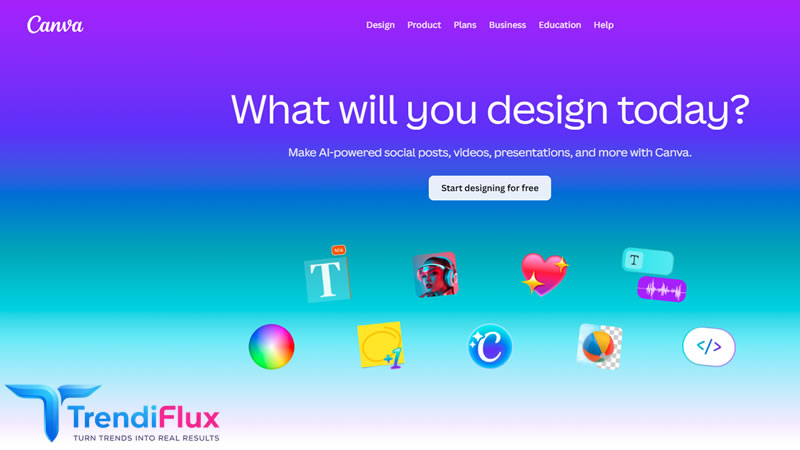
This is where a lot of creators win. They use ChatGPT or Claude for ideas, Canva for visuals, and Grammarly for the final pass. That simple stack is often enough for the day-to-day needs of social posting, especially when you are trying to save time for creators without sacrificing quality.
Meta AI in WhatsApp is one of the most underrated lightweight tools for creators and small businesses. WhatsApp’s help pages say Meta AI can answer questions, help with ideas, summarize unread messages, and support creative tasks inside the app. That makes it useful for quick notes, simple replies, and fast content prompts on the go. The limitation is rollout and availability. It is not equally available everywhere, so some users will see features sooner than others.
The smartest way to use AI Tools for Content Creators is not to collect subscriptions. It is to build a small stack that matches your workflow.
Start with one assistant. That can be ChatGPT, Claude, or Gemini. Use it for ideas, outlines, hooks, and rough drafts. Then add one research tool like Perplexity or NotebookLM so you can check facts and organize sources faster. Next, choose one visual tool such as Canva or Adobe Firefly for graphics and thumbnails. Finally, add one automation layer like Zapier so repetitive work does not eat up your time.
A business example makes this clear. A US local service brand could use Gemini for client replies, ChatGPT for ad copy, Canva for promo graphics, and Zapier for lead routing. That keeps the team moving without hiring extra help. A project example is a creator launching a 10-video series. They can research in Perplexity, script in Claude, edit in Runway or Firefly, and repurpose in Canva. That is how you build an automated content workflow that actually saves time.
Personal test: pick one task you repeat every week. Maybe it is writing intros, making thumbnails, or cleaning up meeting notes. Do it once without AI. Then do it again using only one tool. Keep the tool only if it removes at least two manual steps. That is the fastest way to separate useful tools from shiny distractions.
Also, check out the Best AI Video Generator Tools Trending in 2026.
This trend is growing because AI is becoming embedded in the apps that creators already use. Google is pushing Gemini and NotebookLM deeper into Workspace. OpenAI is turning ChatGPT into a connected app layer. Adobe Firefly is expanding into image, video, and audio production. Perplexity keeps improving research. Zapier is turning workflows into agents. That combination is changing how creators work every day in the USA.
It also explains why AI Tools for Content Creators is more than a buzzword. In 2026, creators are not just asking for better content. They are asking for faster production, smarter research, and fewer manual steps. The tools that win are the ones that help you publish more while keeping quality high.
If you want to grow as a creator in 2026, do not chase every new app. Pick tools that match your real workflow and use them consistently. That is the practical advantage behind AI Tools for Content Creators. The best stack is usually small. One tool for ideas. One for research. One for visuals. One for automation. Once that system is in place, content stops feeling random and starts feeling manageable. You save time. You reduce burnout. You create more with less friction. That is the real win.
The creators who move fastest right now are not the ones using the most tools. They are the ones using the right tools in the right order. Start with one pain point this week and solve it completely. Then add the next tool only when you need it. That is how you build momentum in a market that is changing fast. And that is how AI Tools for Content Creators become a growth advantage instead of another trend you read about and forget.
Trends are evolving faster than ever. TrendiFlux helps you stay updated with real insights, practical strategies, and trending opportunities so you can grow, adapt, and stay ahead in today’s digital world.
1) What are the best AI tools for content creators in USA 2026?
The strongest picks right now are ChatGPT, Claude, Gemini, Perplexity, Canva, Adobe Firefly, Zapier, and Meta AI in WhatsApp. They cover writing, research, design, automation, and quick daily tasks.
2) How do I start using AI for content creation?
Start with one assistant and one visual tool. Use them for outlines, captions, thumbnails, and simple edits before adding more apps into your workflow.
3) Are AI tools enough for social media creators?
They help a lot, but they are not the whole strategy. AI can speed up production, but your hook, voice, and brand angle still matter most.
4) Which tools are best for video editing and automation?
Runway and Adobe Firefly are strong for video creation. Zapier is the best fit for automating repetitive workflows and connecting apps.
5) Is AI Tools for Content Creators a good topic for SEO in 2026?
Yes. It matches strong search intent because creators want practical tool lists, workflow advice, and trend updates. That makes it useful for both clicks and engagement.