NASA Orion Splashdown Photos: What Just Happened in Space?
- April 25, 2026
- 0

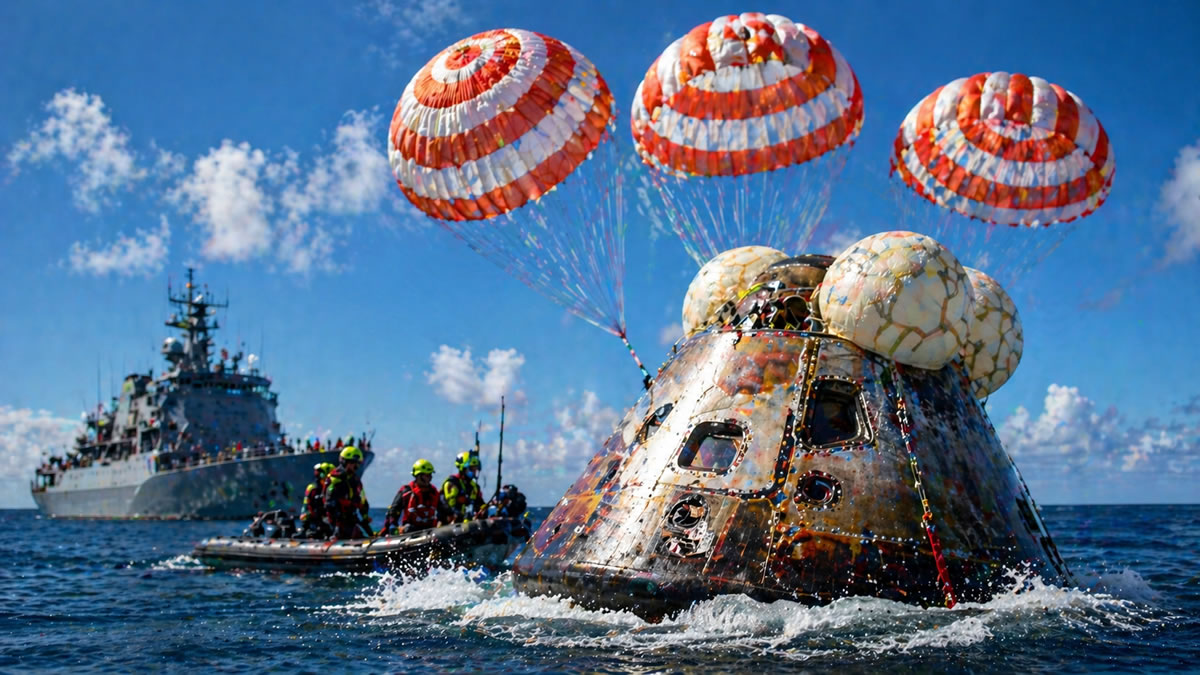
The tension in the NASA control room was high as a charred capsule hurtled through the atmosphere at 25,000 mph. You likely felt the goosebumps watching the NASA Orion splashdown photos stream in, marking the end of a journey that pushes us closer to the lunar surface. For a world watching with bated breath, this wasn’t just a landing; it was a definitive proof of concept for the future of humanity.
This milestone is the viral pulse of the week, capturing the same competitive energy we see in global events. Whether it is the high-stakes Mainz vs Bayern result or the cultural impact of an Alan Osmond death rumor, we crave moments that define an era. In a world where people ask why OpenAI is scared of Alex Bores or if AI jobs in 2026 will exist, NASA’s physical achievement feels grounding and real.
The viral hype surrounding the NASA Orion splashdown photos focuses on the spectacular “skip re-entry” maneuver. In reality, this wasn’t just for the cameras; it was a critical test of the capsule’s skip-entry technique. This method allows the capsule to bounce off the atmosphere once, reducing the G-forces on future astronauts. If this system failed, the path to the 2026 Moon landing would be pushed back by years.
One limitation often ignored by the hype is the heat shield’s wear and tear. While the photos look heroic, NASA engineers must now inspect the ablation patterns to ensure the shielding can handle the even more intense heat of a return from the South Pole of the Moon. A minor miscalculation in the material’s density could be catastrophic for a human crew.
The latest NASA Orion splashdown photos provide a rare look at the scorched Earth-facing side of the spacecraft. The “blackening” of the exterior is a badge of honor, showing that the thermal protection system performed as expected. High-speed cameras mounted on the recovery ships captured the moment the three main parachutes deployed, a sequence that must be perfect every single time.
These images also highlight the recovery hardware in action. Specialized winches and cradles designed for the Orion capsule splashdown were tested in real-world rough seas for the first time. The success of this recovery proves that NASA can safely retrieve astronauts even in suboptimal Pacific weather conditions.
However, the “reality check” is that the interior of the capsule remains a mystery until it reaches the Kennedy Space Center. While the exterior looks great in photos, the internal sensor data will tell the true story of whether the life-support systems survived the extreme vibrations of re-entry.
This splashdown is the final gatekeeper for the Artemis mission 2026, which aims to put the first woman and person of color on the lunar surface. Every successful test flight reduces the risk profile for the upcoming crewed missions. The data gathered from this recovery will be used to fine-tune the training simulations for the astronauts currently preparing for the journey.
There is a brewing controversy regarding the timeline. While the NASA Orion splashdown photos suggest everything is on track, critics argue that the Starship HLS (Human Landing System) integration remains a major bottleneck. The splashdown proves the “return” part of the mission is ready, but the “landing” part still faces significant hurdles.
The limitation here is the massive cost of each mission. Each splashdown recovery involves an entire carrier strike group and thousands of personnel. Scaling this for a sustainable Moon base will require a shift toward more automated or commercial recovery solutions to remain economically viable in the long term.
The NASA Orion splashdown photos are a visual testament to what human ingenuity can achieve when pushed to the limit. They represent more than just a successful mission; they are a promise that the next decade of space exploration will be defined by presence rather than just visits. As we look toward the 2026 lunar horizon, these images serve as a reminder that the most difficult part of going to the Moon is often coming back home.
You can find the high-resolution gallery on NASA’s official Flickr page and the Artemis mission multimedia portal, featuring 4K views of the capsule recovery.
Yes, the capsule performed a perfect skip-entry maneuver and landed within the designated target zone in the Pacific Ocean with all systems functioning.
This success validates the re-entry and recovery protocols, providing the green light for the final assembly of the crewed vehicle intended for the 2026 lunar landing.
The capsule was recovered by the USS Portland and is currently being transported back to San Diego for a full post-flight inspection by NASA technicians.
The blackening is caused by the extreme heat of re-entry (ablation), where the heat shield burns away to protect the interior of the spacecraft from 5,000°F temperatures.