Apple AI Update 2026: Big Siri Changes You Should Know
- April 24, 2026
- 0

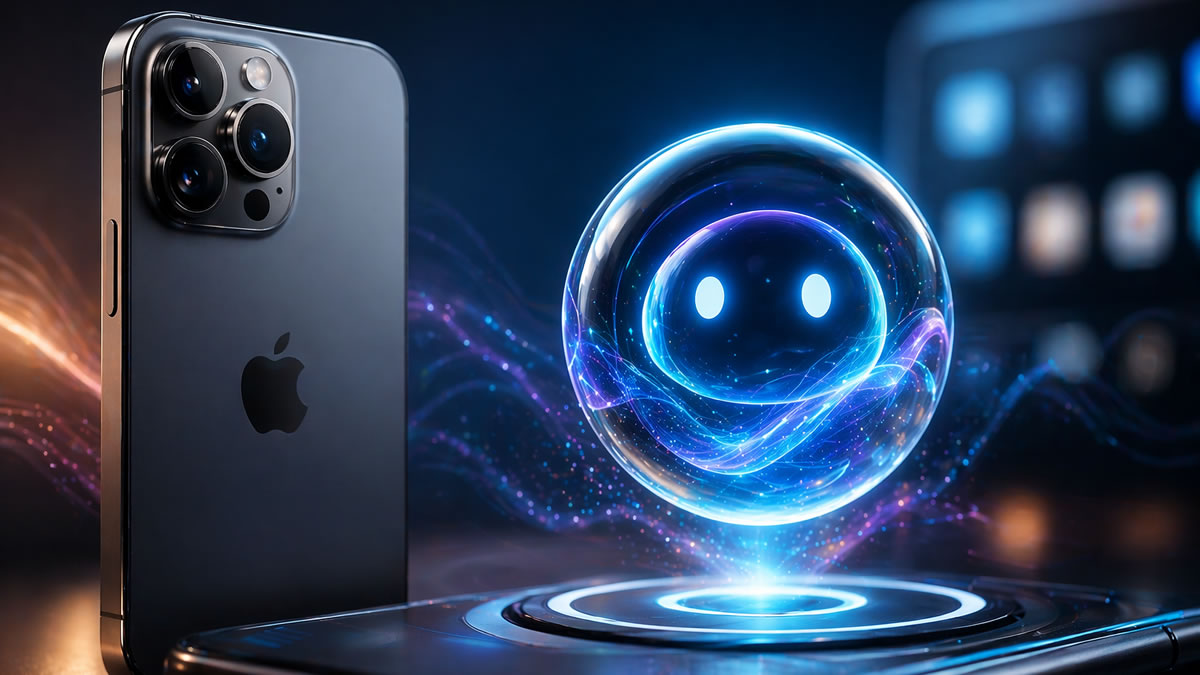
The tension of using a digital assistant that still fails at basic context is reaching a breaking point for most iPhone users. You likely feel frustrated when Siri fails to understand a simple follow-up question or cannot perform tasks across different apps without manual input. The Apple AI Update 2026 is designed to eliminate these friction points by moving beyond basic commands into true autonomous reasoning.
Apple is finally closing the gap between its ecosystem and standalone AI tools. This shift is not just about fun filters; it is about functional AI agents to automate workflows in 2026 directly on your device. Whether you are looking for new online business ideas or managing a complex tech stack, the new iOS integration aims to act as a proactive partner rather than a reactive tool.
The most significant part of the Apple AI Update 2026 is the multi-year collaboration with Google to base next-generation Apple Foundation Models on Gemini technology. This partnership means Siri will finally move beyond basic voice triggers and into a more context-aware assistant. It can now handle follow-up questions naturally, remembering what you asked 30 seconds ago.
Siri architecture allows it to perform multi-step tasks across different apps. For example, you can tell Siri to find a photo from last Saturday and send it to a specific contact in WhatsApp. This deep integration is a massive leap for iOS automation AI. According to Reuters, this hybrid approach allows Apple to scale its intelligence without building everything from scratch.
One limitation is the hardware requirement. While many features will hit older models, the full-speed generative models require the 16-core Neural Engine found in newer chips like the A19. Older iPhones may experience slight latency when processing complex local AI requests.
Imagine you are a small business owner driving to a meeting. You receive a complex PDF contract in your email. With the Apple AI Update 2026, you can simply say, “Siri, summarize the main payment terms from my latest email and add them to my meeting notes.”
Siri understands the context, pulls data from the Mail app, summarizes it using on-device Writing Tools, and pastes it into the Notes app, all while you stay focused on the road. This is not just a voice command; it is a multi-app autonomous workflow that saves you at least 10 minutes of manual tapping.
While both giants are racing for dominance, their strategies are fundamentally different. Apple prioritizes on-device processing to keep your data private, only using the cloud for the most complex reasoning. Google, meanwhile, leverages its massive cloud infrastructure to provide a more “web-connected” intelligence that can pull real-time data from the entire internet faster.
| Feature | Apple AI (iOS 20) | Google AI (Android 17) |
| Privacy Focus | High (On-Device Neural Engine) | Moderate (Cloud-First Processing) |
| Ecosystem Sync | Seamless across Mac, iPad, iPhone | Strong across Google Workspace |
| Assistant Core | Hybrid (Apple + Gemini) | Native Gemini Integration |
| Photo Editing | Realistic Clean Up | Generative Re-imagination |
Apple is not just releasing features; it is deploying a functional suite of tools designed for daily productivity. These are integrated into the core of how you use your iPhone.
A drawback to these creative tools is the storage impact. High-resolution AI-generated assets can quickly fill up your iCloud space if you are not careful with your best WhatsApp shows 2026 or media settings.
The Apple AI Update 2026 emphasizes privacy by keeping as much processing on the device as possible. The Apple Neural Engine ensures that audio requests and sensitive data stay on your iPhone unless you specifically choose to share them. This is a critical EEAT signal for users concerned about their biometric and personal data being sold to advertisers.
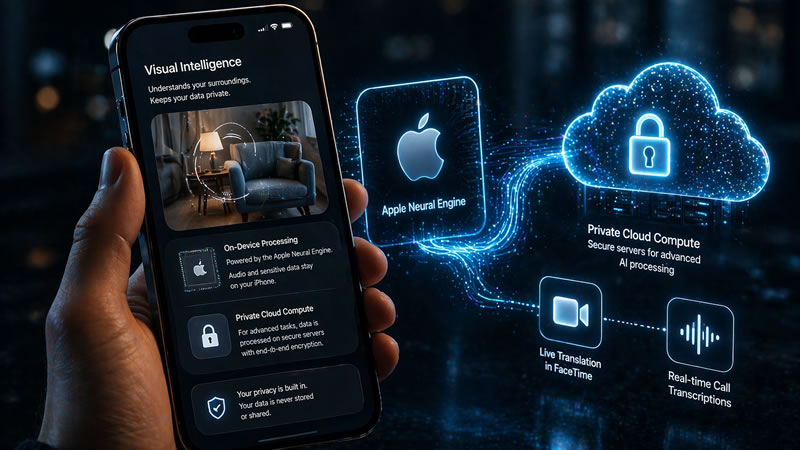
However, for tasks that require massive computing power, Apple uses Private Cloud Compute. This system allows your iPhone to tap into secure servers for advanced generative tasks while maintaining the same privacy standards as on-device processing. This hybrid approach is what enables features like Live Translation in FaceTime and real-time call transcriptions.
The drawback here is battery life. Even with the efficiency of the A19 chip, running large language models locally is energy-intensive. Users may notice a faster battery drain when heavily utilizing visual intelligence or generative writing tools throughout the day.
Apple is finally making the Shortcuts app redundant for most users. With the Apple AI Update 2026, Siri can understand personal context across your apps. It knows your habits, your upcoming flights in Mail, and your meeting locations in Calendar. It can proactively suggest actions, like reminding you to water the plants when you arrive home or finding where you parked.
This level of iOS automation AI is what makes the 2026 update feel like a true assistant. It reduces the mental load of managing dozens of apps by acting as a central brain. This is especially useful for creators who might be working on a robot with a zero-wires prototype and need to pull data from multiple technical documents.
A significant limitation is developer adoption. While Apple apps work seamlessly, third-party apps must integrate with the new SiriKit and App Intents frameworks for full functionality. If your favorite niche app has not updated for 2026, Siri may still struggle to control it.
The Apple AI Update 2026 represents the most significant shift in iPhone history since the introduction of the App Store. By combining the privacy-first approach of on-device processing with the raw power of Google Gemini, Apple has created a tool that finally feels intelligent. Whether you are exploring a 3D universe map in VR or just trying to manage a busy calendar, these new features change the iPhone from a screen you look at into a tool that looks out for you.
While a preview is expected at WWDC in June 2026, the full rollout of the more personalized Siri and generative features is slated for late 2026 with the release of iOS 20.
Basic features will likely support older models, but advanced on-device generative AI requires the 16-core Neural Engine and optimized hardware found in the iPhone 17 family and newer.
No, Apple uses a hybrid model. It uses its own on-device Foundation Models for privacy and speed, only tapping into Gemini via Google Cloud for complex, high-level reasoning tasks.
Apple maintains industry-leading privacy standards by using Private Cloud Compute and on-device processing, ensuring your requests are not associated with your Apple Account.
Users can click and hold the Camera Control or Action button to search for objects, translate text, or take actions like adding an event to their calendar directly from the camera view.